

Delaware Vasculitis Treatment - Rheumatology Center of Delaware
We offer the latest quality, state of the art medical care yet in a personable setting. We aim to meld the cutting edge specialist medical care that our clients expect in a comfortable family-oriented atmosphere.


Delaware's Specialized Care for Vasculitis Disease at the Rheumatology Center of Delaware
At the Rheumatology Center of Delaware, we specialize in providing comprehensive care for individuals with vasculitis. Specifically, we focus on enhancing overall health and well-being. Moreover, our experienced team creates personalized treatment plans designed to manage inflammation, relieve symptoms, and minimize the risk of complications. As a result, we are dedicated to helping patients take control of their health and, ultimately, enjoy a more comfortable and fulfilling life.

Understanding vasculitis, one blood vessel at a time.
Vasculitis isn’t one disease it’s a family of conditions defined by which vessels they inflame. Here’s what that means for symptoms, diagnosis, and the treatment plan a rheumatologist builds around it.
Classified by vessel size
Large vessel
Major arteries giant cell arteritis, Takayasu arteritis
Medium vessel
Medium arteries polyarteritis nodosa, Kawasaki disease
Small vessel
Arterioles, capillaries, venules GPA, MPA, EGPA, IgA vasculitis
What is vasculitis?
Vasculitis means inflammation of blood vessel walls. The term describes a group of diseases rather than one single condition. Different forms can involve large, medium, or small blood vessels, which helps explain why vasculitis can produce very different symptoms from one patient to another.
Blood vessels carry oxygen and nutrients throughout the body. When inflammation damages a vessel wall, it can interfere with normal blood flow and potentially injure the tissues or organs that vessel supplies.
Some forms primarily affect one area, such as the skin. Others are systemic, meaning multiple organs or body systems may be involved which is why vasculitis requires careful medical evaluation rather than relying on a single symptom or lab result.
What causes vasculitis?
Vasculitis is crucial to prevent irreversible damage to organs and tissues, including blood vessels. Prompt medical attention can lead to more effective management and better outcomes for patients by addressing inflammation before it causes permanent harm to blood vessels and surrounding tissues.
Because of this, a rheumatologist typically investigates more than the blood vessel inflammation itself.
The evaluation may look for:
- Evidence of systemic autoimmune disease
- Recent or chronic infections when clinically relevant
- Specific antibodies or other laboratory abnormalities
- Other conditions that could explain similar symptoms
- Medication exposures
What are common symptoms of vasculitis
Symptoms depend on which blood vessels and organs are affected. General symptoms can include fatigue, fever, loss of appetite, unexplained weight loss, muscle aches, or joint discomfort, while organ-specific disease may cause skin, nerve, kidney, lung, eye, or gastrointestinal symptoms.
General
- Persistent fatigue
- Fever
- Reduced appetite
- Unexplained weight loss
- Muscle aches & joint pain
Skin
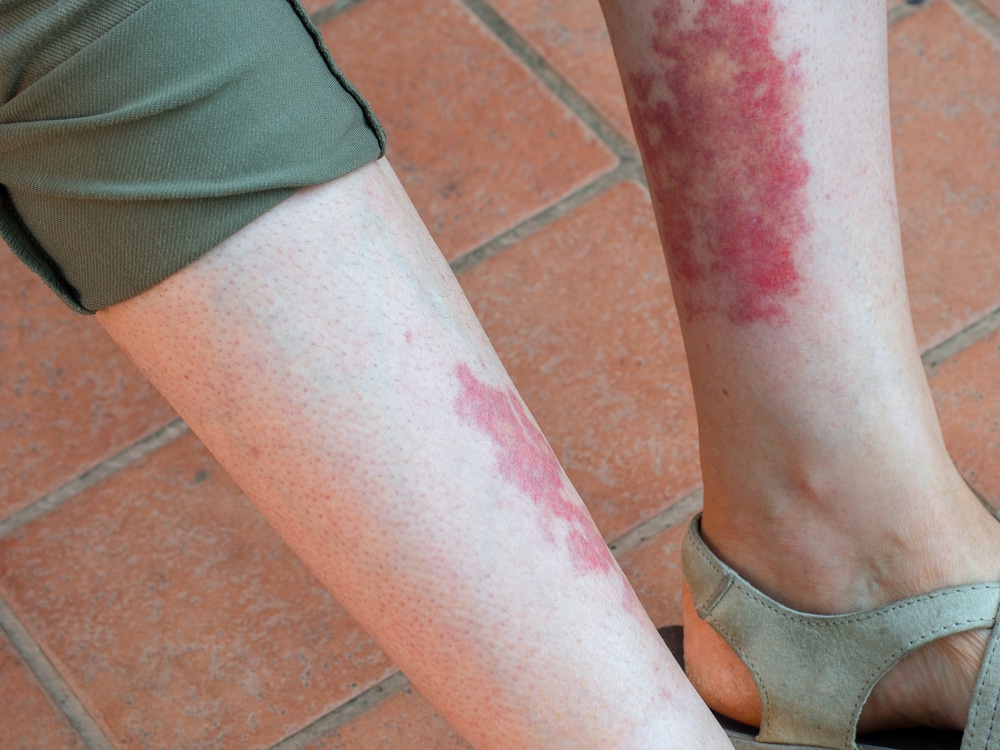
- Red or purple spots
- Raised purplish lesions
- Bruising-like changes
- Ulcers or sores
- Muscle aches & joint pain
Nerve
- Numbness or tingling
- Burning sensations
- Weakness
Kidney
- Often no early symptoms
- Found through blood & urine testing
Lung & respiratory
- Persistent cough
- Shortness of breath
Eyes & digestive
- Vision changes
- Abdominal pain
A rash alone does not establish a vasculitis diagnosis, and these findings overlap with many other diseases symptoms should always be interpreted within a complete medical evaluation.
Can vasculitis be serious?
Yes. Some forms remain limited to the skin or another localized area, while systemic vasculitis can affect important organs. The potential severity depends on the specific disease, the vessels involved, the extent of inflammation, and whether vital organs are affected. Prompt evaluation becomes particularly important when symptoms suggest possible involvement of the eyes, nervous system, kidneys, lungs, heart, or other major organs.
How is vasculitis diagnosed?
There is no single test that diagnoses every form of vasculitis. A rheumatologist typically combines the patient’s symptoms and medical history with a physical examination, laboratory testing, urine studies, imaging, and sometimes tissue biopsy or other specialized testing.

What causes vasculitis?
Vasculitis is crucial to prevent irreversible damage to organs and tissues, including blood vessels. Prompt medical attention can lead to more effective management and better outcomes for patients by addressing inflammation before it causes permanent harm to blood vessels and surrounding tissues.
Because of this, a rheumatologist typically investigates more than the blood vessel inflammation itself.
The evaluation may look for:
- Evidence of systemic autoimmune disease
- Recent or chronic infections when clinically relevant
- Specific antibodies or other laboratory abnormalities
- Other conditions that could explain similar symptoms
- Medication exposures
How is vasculitis treated?
Treatment depends on the specific type of vasculitis, its severity, the organs affected, and the patient’s overall health. The main goals are generally to control blood vessel inflammation, protect organs, achieve disease control or remission when possible, and reduce the risk of future flares while limiting treatment-related complications. There is no universal vasculitis treatment plan a patient with disease limited to the skin may require a very different approach from someone with kidney or lung involvement, and treatment can change over time.
Corticosteroids
Corticosteroids such as prednisone can rapidly reduce inflammation and remain important in treating many vasculitis disorders. However, prolonged or higher-dose corticosteroid treatment can cause significant adverse effects, so rheumatologists often add other medications that help control disease while reducing long-term steroid exposure. Patients taking corticosteroids should never independently change or stop their prescribed medication without discussing it with their healthcare professional.
Immunosuppressive & immune-targeted medications
Depending on diagnosis and severity, rheumatologists may use medications that modify or suppress parts of the immune response, including:
- Methotrexate
- Mycophenolate mofetil
- Rituximab
- Azathioprine
- Cyclophosphamide
- Other disease-specific therapies
The presence of a medication on this list doesn’t mean it’s appropriate for every patient — selection depends on the exact diagnosis, disease severity, organ involvement, previous treatments, infection risk, other medical conditions, pregnancy considerations when relevant, and individual clinical assessment.
Is infusion therapy required?
Some medications for particular forms of vasculitis are given by IV infusion, but it isn't necessary for every patient. At Rheumatology Center of Delaware, infusion therapy is one possible component of a treatment plan — never the starting point for care.
Are biologics used?
Yes, when clinically appropriate. Rituximab, for example, has an established role in some ANCA-associated vasculitis disorders. A rheumatologist determines whether a biologic fits after evaluating diagnosis, severity, organ involvement, previous treatment, and individual risk.
Monitoring and remission
Monitoring helps rheumatologists evaluate whether inflammation is controlled, identify possible organ involvement or relapse, and watch for medication-related complications. Because some forms of vasculitis can return after improvement, follow-up may continue even when symptoms are well controlled.
- Follow-up rheumatology visits and symptom review
- Physical examinations
- Blood and urine testing, including medication safety testing
- Imaging when clinically indicated
- Assessment of affected organs and screening for treatment-related effects
An important part of follow-up is distinguishing active inflammation from symptoms caused by previous tissue damage, medication effects, infection, or an unrelated condition that distinction affects whether treatment needs to increase, change, decrease, or stay the same.
Living with vasculitis
Managing vasculitis extends beyond controlling inflammation. Patients receiving immune-modifying treatment may need to discuss infection prevention, vaccination, medication interactions, bone health, cardiovascular health, pregnancy planning, exercise, and other health considerations with their healthcare team.
- Take medications exactly as prescribed
- Keep scheduled laboratory testing
- Report significant new symptoms
- Maintain appropriate physical activity when medically safe
- Avoid tobacco
- Follow recommendations for cardiovascular health
- Discuss vaccines with your treating clinician
- Keep an updated medication list
Discuss any major dietary supplements or alternative treatments with your healthcare professional some products can interact with prescription medications.
When should you see a rheumatologist?
Consider rheumatology evaluation when persistent or unexplained symptoms raise concern for systemic blood vessel inflammation, particularly when multiple organ systems are involved or testing suggests an inflammatory or autoimmune process. A referral may be appropriate for:
- Unexplained inflammatory skin changes with systemic symptoms
- Persistent joint or muscle symptoms with abnormal inflammatory findings
- Unexplained nerve symptoms associated with systemic inflammation
- Kidney abnormalities occurring with autoimmune findings
- Symptoms suggesting an established form of systemic vasculitis
- Previously diagnosed vasculitis requiring continued management
Many of these symptoms have causes other than vasculitis a rheumatologist’s role is to evaluate the overall pattern and determine what additional investigation may be appropriate.
- Symptoms
- Evaluation
- Diagnosis
- Personalized treatment
- Monitoring
Areas We Serve in Delaware - Vasculitis Service
Wilmington
Wilmington facility is committed to providing expert care in...
Dover
Dover facility offers prompt medical attention for...
Milford
Milford facility is dedicated to providing specialized care in...
Rheumatology Center of Delaware's Medical Clinic Services in Delaware
At the Rheumatology Center of Delaware, we offer specialized services for managing rheumatoid conditions. As a leading facility, we provide timely evaluations and treatments to reduce pain, inflammation, and improve mobility. With a state-of-the-art facility, we ensure comprehensive care from diagnosis to long-term management. Join our community and make us your go-to for expert rheumatoid arthritis support, helping you regain control of your wellness.

Rheumatoid Arthritis

Crohn’s

Osteoarthritis

Psoriasis and
Psoriatic Arthritis

Systemic Lupus

Ulcerative colitis

Joint injections

Connective
tissue disease

Osteoporosis

Temporal arteritis

Vasculitis

Generalized
joint pain
Ankylosing Spondylitis

Gout

Fibromyalgia

Polymyalgia
rheumatica
Frequently Asked Questions
For Vasculitis Treatment – Rheumatology Center of Delaware
What is vasculitis and how does it affect blood vessels and blood flow?
Vasculitis is an inflammation of the blood vessels that can restrict blood flow. This condition can affect both large and small blood vessels, leading to complications in various organs. Depending on the type of vasculitis, symptoms may range from mild to severe.
What are the types of vasculitis and which organs can be affected?
There are several types of vasculitis, including giant cell arteritis, granulomatosis with polyangiitis, and those linked to autoimmune diseases like rheumatoid arthritis. Vasculitis can affect different organs, including the central nervous system, and may involve large blood vessels or small blood vessels.
How is vasculitis diagnosed and what role do blood tests play?
Diagnosis of vasculitis often requires blood tests to detect inflammation and immune system activity. These tests help identify the underlying causes of vasculitis, including autoimmune diseases like Kawasaki disease, and distinguish between various inflammatory diseases.
What are the early symptoms of vasculitis, and how can early diagnosis improve treatment outcomes?
The symptoms of vasculitis can vary, but common signs include fever, fatigue, and skin rashes. Early diagnosis is crucial for effective treatment, as it can help reduce damage to blood vessels and organs, improving overall health outcomes.
What are the treatments for vasculitis, and how do they address the immune system and blood flow issues?
Treatments for vasculitis typically focus on reducing inflammation and modulating the immune system, often using immunosuppressive medications. For diseases like giant cell arteritis, timely treatment can prevent damage to large blood vessels and improve blood flow.
Can vasculitis be associated with other autoimmune diseases or inflammatory conditions?
Yes, vasculitis is often linked to other autoimmune diseases, such as rheumatoid arthritis, and inflammatory conditions. It can develop as a complication of these diseases, causing additional challenges for managing the condition and ensuring appropriate treatment strategies.
Your Rheumatology Care Experts in Delaware
Trustworthy, compassionate care from professionals you can rely on. Schedule your appointment today.

Begin Your Treatment Today! Book Your Vasculitis Care
Discover the Magic of Rehoboth Beach Boardwalk: Sun, Fun, and Memories Await!
The Rehoboth Beach Boardwalk is a vibrant coastal destination where scenic ocean views, charming shops, and delicious local treats create the perfect getaway. Whether you’re enjoying a leisurely stroll, exploring unique boutiques, or indulging in fresh seafood, the boardwalk offers something for everyone. However, if joint pain, stiffness, or inflammation from conditions like temporal arteritis or arthritis are making it harder to stay active, expert care can help. The Rheumatology Center of Delaware provides specialized treatments to relieve discomfort and improve mobility. Visit today and take control of your health, so you can keep making unforgettable memories at Rehoboth Beach Boardwalk!